Les médias libres : un levier structurant de la démocratie et de la citoyenneté
Table of contents
- Introduction
- Le droit à la communication par tous et pour tous
- Médias citoyens : un enjeu social et démocratique majeur
- Entre risques de fermeture et menaces de poursuites judiciaires, les nouvelles radios tunisiennes acculées
- Revolução de Jasmim : a comunicação em rede nos levantes populares da Tunísia
- Julian Assange et la surveillance de masse
- La radio dans la ligne de mire
- Inter-American Commission on Human Rights Reviews Freedom of Speech in Guatemala
- Au Venezuela, la marche vers la démocratisation des médias
- La Europa del sur y América Latina, unidos por el P2P
- Que sont devenues les radios communautaires, alternatives et populaires ?
- Argentine : le gouvernement affronte le plus grand groupe de médias du pays
- L’indépendance des médias et la nouvelle Constitution de la Tunisie
Inter-American Commission on Human Rights Reviews Freedom of Speech in Guatemala
This article was published more than ten years ago. The information it contains may be incomplete or out of date.
Résumé en français : Au cours de sa 147ème session sur la liberté d’expression des peuples autochtones, qui se déroulera le 15 mars prochain à Washington, la Commission interaméricaine sur les droits de l’homme examinera le cas des radios communautaires au Guatemala, toujours considérées comme illégales par la législation du pays.
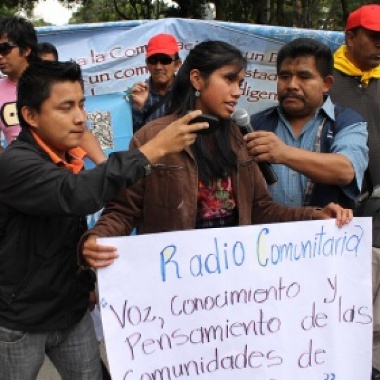
On March 15, in Washington D.C., the Inter-American Commission on Human Rights (IACHR) will hold a hearing during its 147th Period of Sessions concerning the freedom of expression of Indigenous Peoples in Guatemala. The hearing will address the status of community radio in Guatemala, which despite being guaranteed to Indigenous Peoples by the UN Declaration on the Rights of Indigenous Peoples, the 1996 Peace Accords, and the Guatemalan Constitution, is not legal under the country’s current telecommunications law. Cesar Gomez will represent the Guatemalan community radio movement and Cultural Survival, an Indigenous Peoples rights organization based in Cambridge, MA.
For over a decade, Indigenous radio advocates have been lobbying the Guatemalan Congress to legalize community radio. For seven years, Cultural Survival has partnered with a network of over 80 community radio stations across Guatemala, many of which broadcast in one or more of the country’s 23 Indigenous languages, in building the stations’ capacity and supporting their legalization efforts. The proposed Community Media Bill, Initiative 4087, which would create legal authorizations for nonprofit community radio by allowing Indigenous Peoples equal access to the radio spectrum, has been awaiting congressional approval since 2010.